Antarctica, Argentina, Uruguay, and Brazil
Antarctica, Melchior Islands
We spent 2 days crossing the Drake Passage on Atlas Ocean Voyage's World Voyager. Now the Drake Passage is reputed to have the roughest seas on the planet, and the crossing wasn't anywhere near smooth, but it wasn't as bad as I had expected. I suffered no ill effects, but many of my fellow passengers didn't do so well. Wherever we fell in the spectrum, everyone was happy to arrive in Antarctica, which greeted us with smooth seas.
Our first stop was in the Melchior Islands on the western side of the Antarctic Peninsula. We soon donned our waterproof pants, heavy parkas, and rubber boots and clambered into the Zodiacs to explore the islands.
Let's just say I took A LOT of photos. I've winnowed them down to these:

These Antarctic Fur Seals seemed aware of our arrival, if not particularly disturbed by it.

As we passed her in the Zodiac, this Antarctic Fur Seal expressed her opinion about our presence.
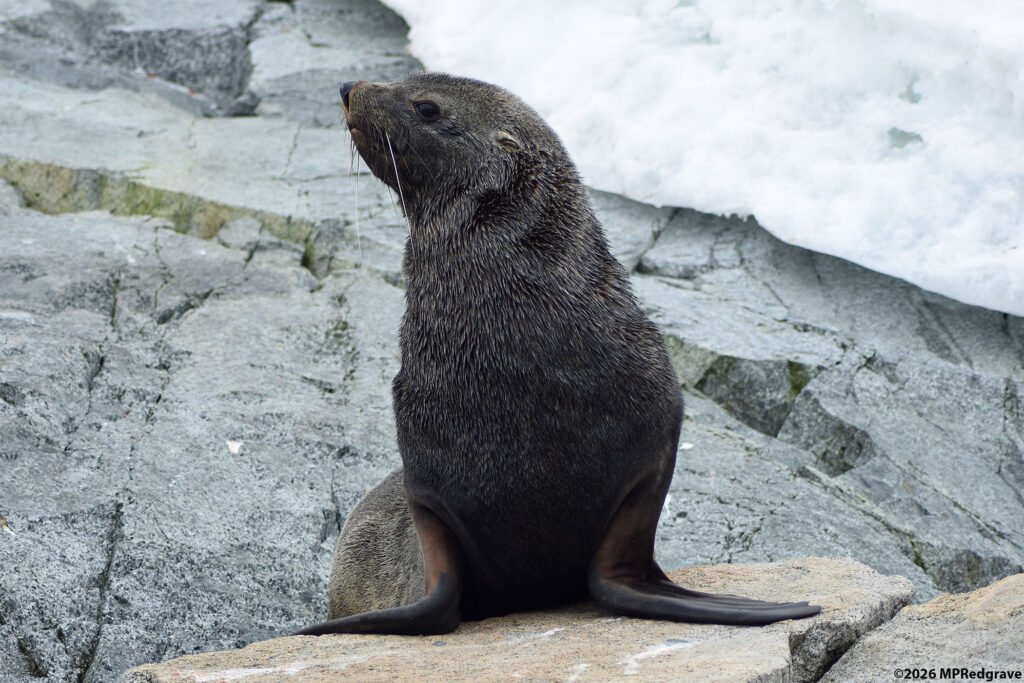
Her companion, on the other hand, seemed to ignore us. Antarctic Fur Seals are not actually seals, they are sea lions. Note that this guy has external ears and can use his forelimbs to raise the forward half of his body. In addition (although you can't see it here), he can rotate his pelvis so that his rear legs support the rear of his body off the ground. A seal, on the other hand, has internal ears, can't support its body above the ground on its forelimbs, and can't rotate its pelvis. On land, sea lions can walk, if rather awkwardly, whereas seals move by dragging their bodies with no help from their hind limbs. That said, these guys are commonly known as "Fur Seals".

These are chinstrap penguins, so named because of the black "strap" that runs under their chins. Chinstraps stand about 2-3 feet tall and are completely adorable!

As accumulated snow slides inexorably downhill, it often collapses into the sea. When that happens, it exposes a face that has layer upon layer of differently textured snow. Wet, warm-weather snow is denser and heavier than is dryer, cold-weather snow. Snow scientists can then measure the depth and moisture content of each layer and determine past climatic conditions in the area. So it not only looks cool, it has a useful purpose.

On nearly sheer rocks faces covered with snow, we saw many examples of these red splotches on the snow. These splotches are caused by a green algae that secretes a red pigment, which in turn acts as a sunscreen that blocks UV light from harming the algae.

In our exploration, we found this snow cave that had a waterfall erupting from its ceiling. No, we didn't go in–going under snow that's actively melting isn't a particularly good idea!

There is some non-aquatic plant life in Antarctica, but it's fairly primitive. The orange and yellow areas on this rock are crustose lichens, usually the first forms of plant life to inhabit bare rock. Lichens are interesting organisms because they are actually two organisms, an algae and a fungus, growing symbiotically as if they were a single organism. Lichens typically grow very slowly, secreting tiny amounts of acid that etch the underlying rock and release it minerals to the lichens.

This is another kind of lichen, a fruticose lichen. This type of lichen cannot survive on bare rock, but can migrate onto rock faces that the crustose lichens have "softened."

After considerable time, a rudimentary "soil" builds up under fruticose lichens. The presence of this "soil" allows mosses to grow. In Antarctica, because of the harsh environment, the process stops with the moss. Higher plants, like ferns or seed plants, cannot survive the cold, dry environment of Antarctica. Okay, botany lesson over, let's get back to the critters.
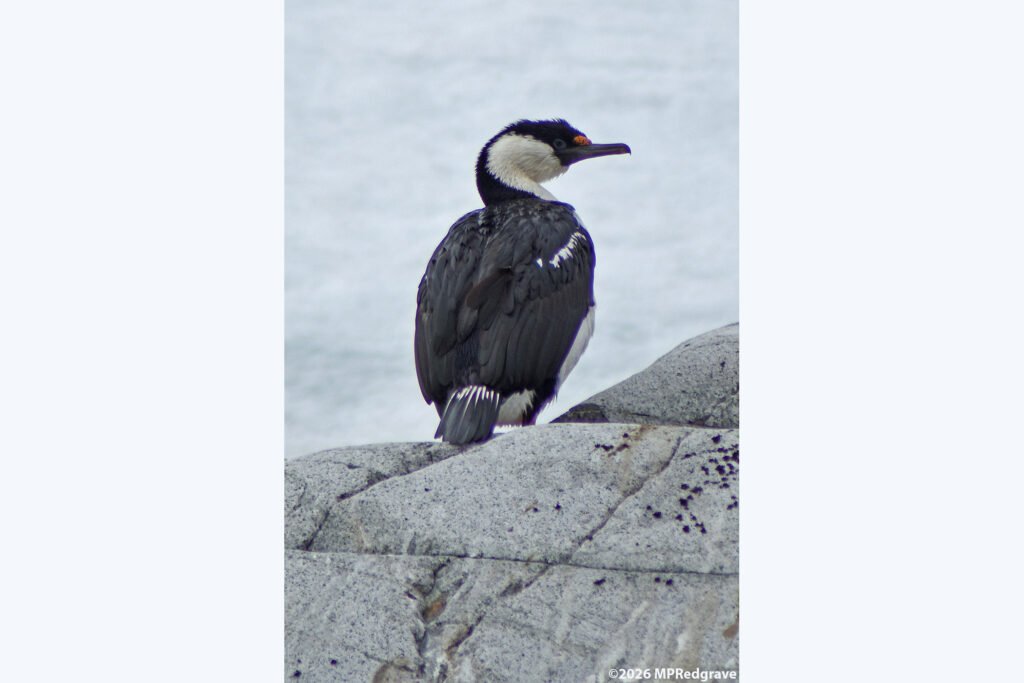
This handsome bird is the Antarctic brand of cormorant, the Antarctic Shag. Check out his blue eyes!
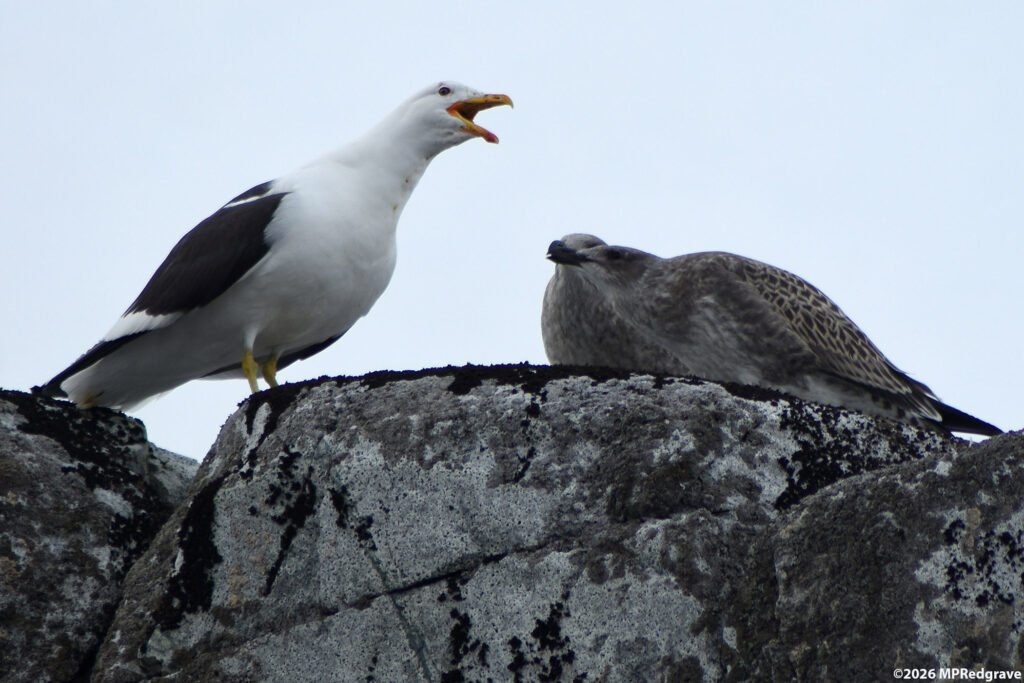
This bird is a Kelp Gull. It's a common bird throughout the southern oceans. This example is doing what gulls are all so good at, loudly announcing its presence! The two smaller birds are juvenile Kelp Gulls, probably the offspring of our squawking friend.
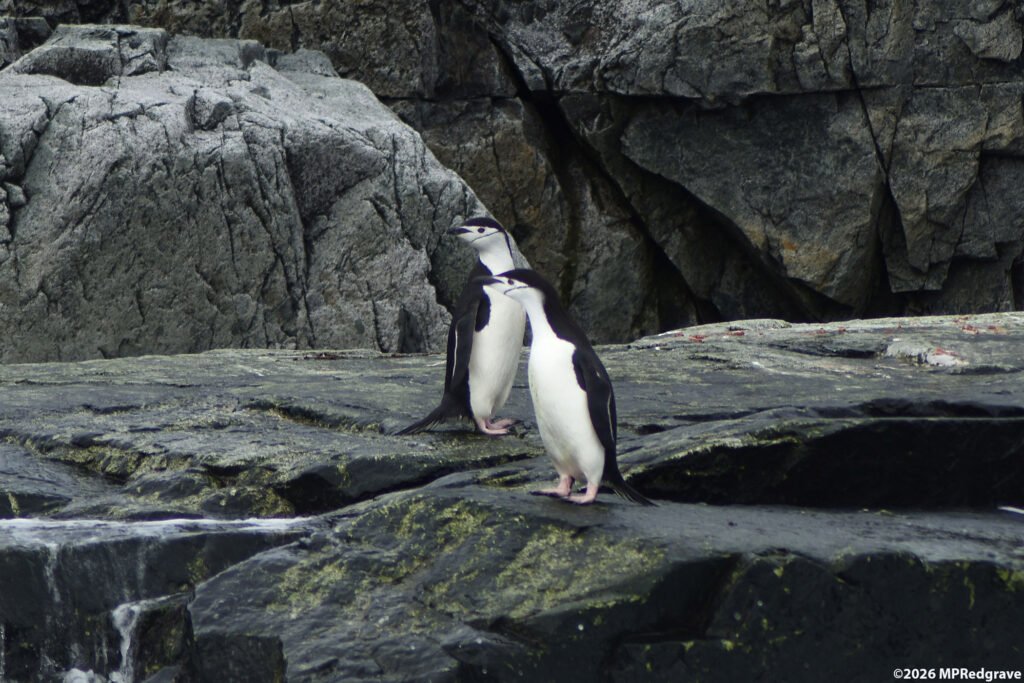
Here are two more chinstrap penguins. They're cute little guys, don't you think?
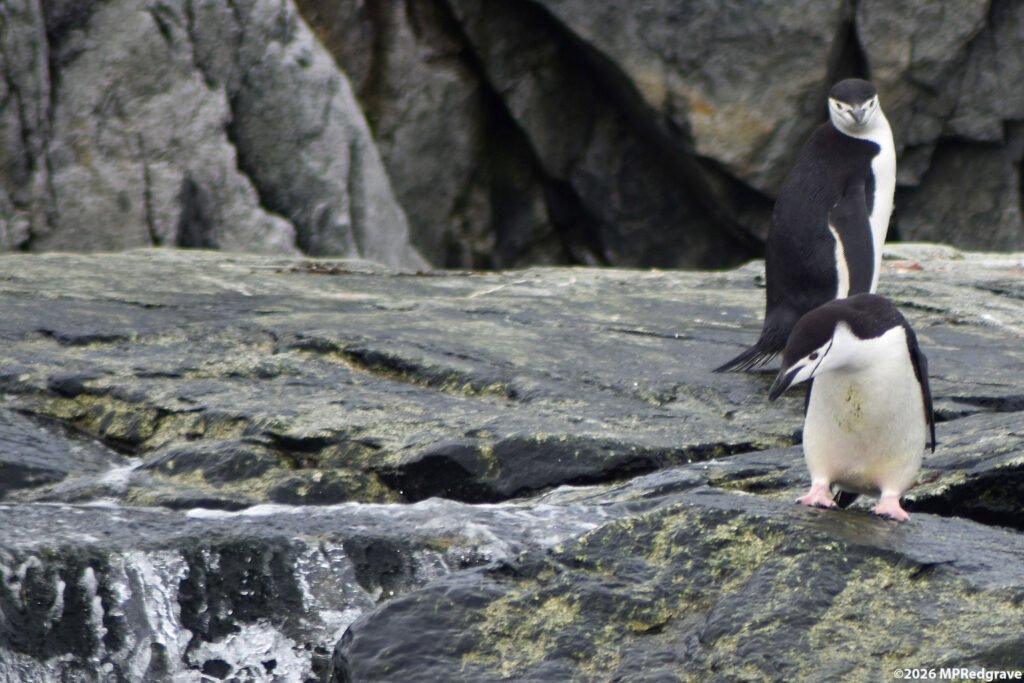
As we were watching them, something caught the attention of the penguin closer to us and he (or she) bent down to investigate, while its friend curiously looked on.
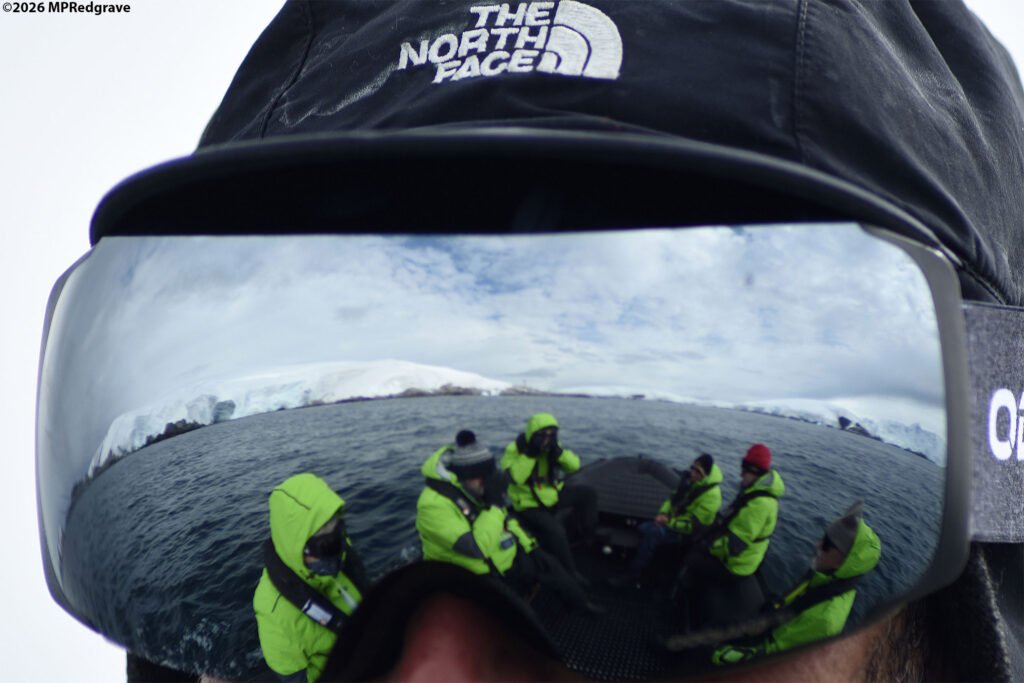
Here are six parka-wrapped humans reflected in the goggles of their guide. All of them seemed to be awestruck by the beauty and wonder that the Melchior Islands offered.