Antarctica, Argentina, Uruguay, and Brazil
Paraná Delta
The Río Paraná is one of South America's great rivers, the continent's second longest (after the Amazon) at 3032 miles. It flows southward through Brazil, Paraguay, and Argentina, emptying into the Río de la Plata via the Paraná Delta. The Delta covers some 6,000-9,000 square miles, depending on what one counts as being part of the Delta, but by any standard it is vast.
The Delta is a popular vacation and second home destination for the millions living in the Buenos Aires area, less than an hour's drive away. Its thousands of islands are dotted with houses, from ramshackle to opulent. It would be so easy to get lost in its bewildering maze of countless channels.
I had to experience it. Here are some photos:

We entered the Paraná Delta via one its many outlet channels, the Río San Antonio. The Río San Antonio forms a direct link between the Paraná and the Río de la Plata. Its water moves swiftly and is laden with the silt of the Paraná, hence its brown color. There were a few houses along the Río San Antonio's bank, but they were small and all elevated on stilts.

We soon turned off the Río San Antonio into a much smaller and slower flowing channel. We started seeing many more houses along the banks, as well as the occasional side channel, like this one.
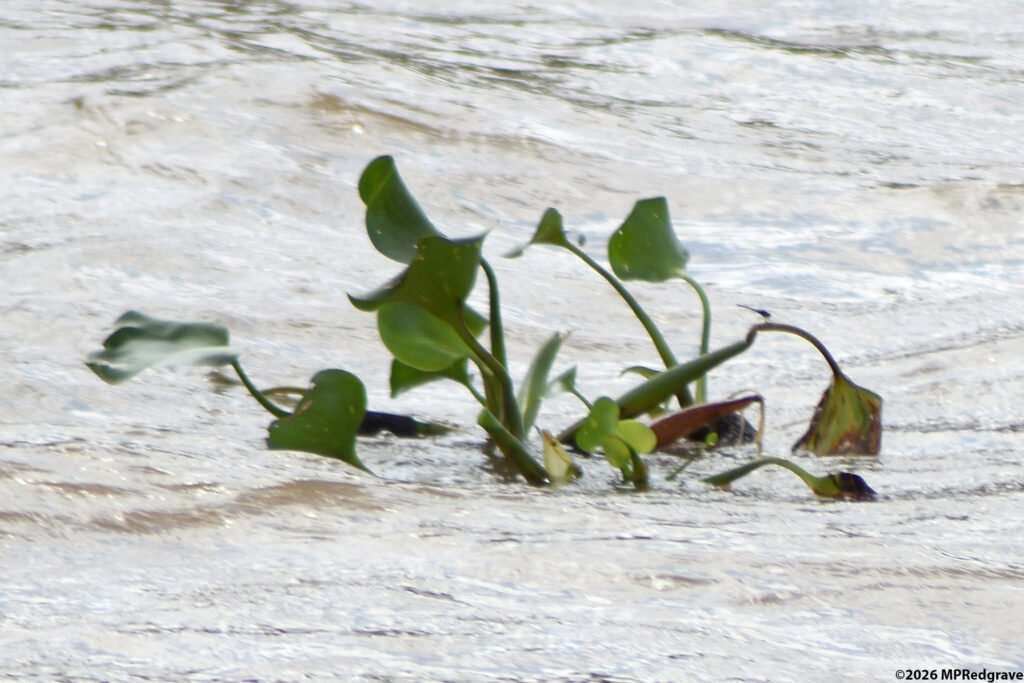
This is water hyacinth. This plant is completely water-borne, with air-filled bladders to keep it afloat and roots that dangle into the water below the plant. A native to the Paraná Delta, the water hyacinth is a scourge elsewhere in the world. It has a prodigious growth rate that allows it to clog waterways and harbors that don't have natural methods of control. In the Paraná Delta, native insects and fungi keep the hyacinth's growth rate in check. Elsewhere, chemical methods are typically used to control the hyacinth, since introducing the Paraná Delta's inhibiting organisms is likely to have negative unintended consequences. The irony is the the water hyacinth can only escape the Paraná Delta through deliberate or careless action. It is difficult to keep alive when not floating on water and saltwater kills it. It is therefore trapped in its native habitat.
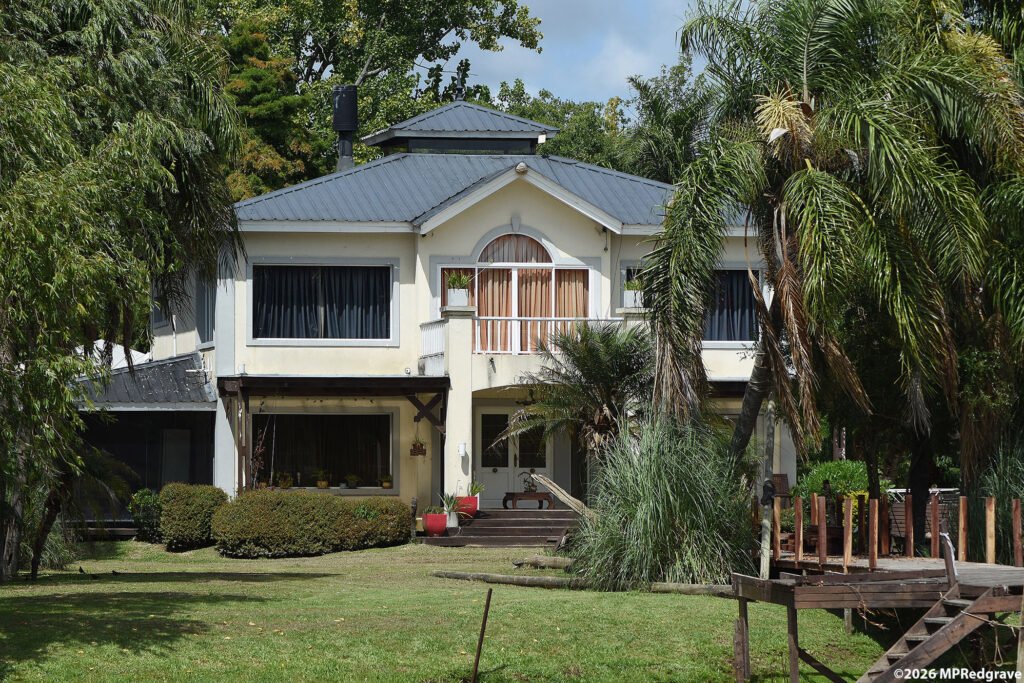
Houses in the Paraná Delta range from ramshackle to opulent. This example looked like it falls somewhere in between those extremes. Our tour narrator mentioned that houses in the Delta typically sell for somewhere between $30K and $100K in US dollars. That sounds cheap to my North American ears. Adding another 0 to those prices would be more what I would expect at home!
The living space in houses in the Delta is typically on the second floor. If the house is small and is only one story, it is usually elevated on stilts. It does occasionally flood in the Paraná Delta.

It's very common for residents of the greater Buenos Aires metropolitan area (there are 15 million of them!) to rent a house in the Paraná Delta for a few days or so to escape the city. That's what I envision is going on here. I see Mom and Dad and their 3 kids, and maybe Grandma, enjoying a cooling dip in the Delta's water. We were told that air conditioning is rare in houses in the Delta and, believe me, it is humid there! We were also told that many of the islands don't have electricity at all and houses have to rely on private generators.

There are precious few roads in the Paraná Delta. Most islands, in fact, have no roads at all. The most common way that island dwellers get around is the take the bus, is this case a "water bus", known locally as a lancha colectiva. These boats are everywhere in the Paraná Delta and stop where you want them to. The are regulated by the government and charge a very low fare—on the order of a dollar or two.

Here's another lancha colectiva. Notice that it is nearly identical to the previous one. There are 5 companies in the Paraná Delta that operate lanchas colectivas. The only way to tell them apart is how they paint their center exhaust stack.
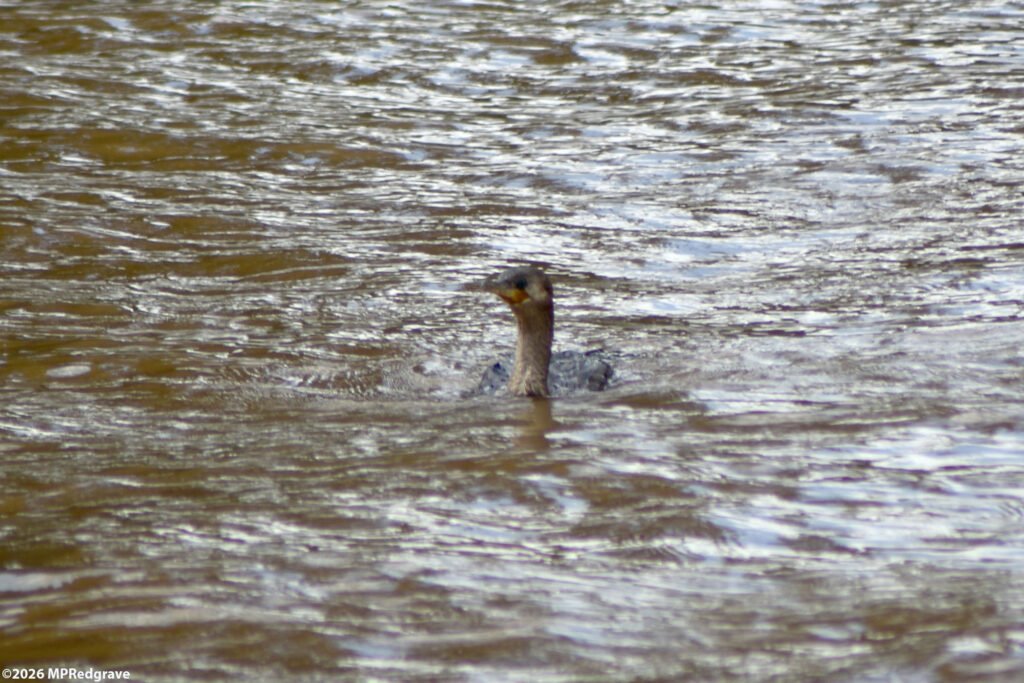
One of the reasons that I wanted to visit the Paraná Delta is its reputation for abundant wildlife. I had hoped to see and photograph many different critters. Alas, despite standing on the bow of our tour boat for the better part of 2 hours, I only saw two critters close enough to identify. I did take this rather pitiful photo of a biguá, a fresh-water South American cormorant. I promise there is a biguá in the photo. And I totally flubbed getting a photo of a river otter. I pinky swear I did see it!

All of the lanchas colectivas' routes start and stop in Tigre. Tigre—named after the jaguars that used to inhabit the area before man drove them away—sits directly adjacent to the Paraná Delta, separated from it by the Lujan River (yet another of the Paraná's side channels to the Río de la Plata). There had to have been a dozen of the lanchas colectivas tied up here, some double-parked. Tigre is the jumping off point for vacationers on their way into the Delta and a source of fuel and provisions for residents of the Delta.

In Tigre, we visited the Puerto de Frutos, a former harbor that has been converted into what is effectively an open-air shopping mall filled with shops and restaurants. This little restaurant's name made me chuckle—Waffles del Mundo, or Waffles of the World in English. I've never seen anything similar in my travels!