Antarctica, Argentina, Uruguay, and Brazil
Iguazú Falls, Argentine Side
Before we left South America, we traveled to the far northern reaches of Argentina to see Iguazú Falls. Iguazú Falls is a collection of between 150 and 300 (depending on the water flow) individual waterfalls that lie on the border of Argentina and Brazil. We spent the first of our two days visiting the Falls on the Argentinian side.
Iguazú Falls is easily the widest falls in the world, at 2.7 kilometers (1.7 miles) wide, with Africa’s Victoria Falls being a distant second at 1.7 kilometers (1.1 miles) wide. In terms of how much water flows over the falls, each year Iguazú Falls flows the second largest amount of water in the world, flowing about 75% of Niagara Falls' annual production. The flow at Iguazú, though, is much more variable—at peak times, Iguazú flows as much as 4 times the water that Niagara ever does. Whether or not you give it the crown of the Biggest Waterfalls in the World, it’s still worth the effort to see it!
Here are some photos:

The border between Argentina and Brazil passes through Iguazú Falls, but 80% or the Falls’ length is in Argentina. The width of the Falls is tough to grasp. This stretch of the Falls, entirely in Argentina, is but a small portion of its width. The far end, beyond what the picture shows, disappeared into the ever-present mist produced by the Falls.

This u-shaped section of Iguazú Falls is called the Devil’s Throat (Garganta del Diablo in Spanish). About half of the entire Falls’ flow passes through the Devil’s Throat. The flow of water through the Devil’s Throat is so fierce that it is a huge, loud churning maelstrom of water and spray. Seeing it up close was an experience I won’t soon forget!

Any photography was a challenge after I stepped onto the platform across from the Devil’s Throat—the spray was so heavy that everything was quickly soaked, including my camera’s lens. It was pointless to try to wipe the spray droplets from the lens—within seconds it was soaked again. So I kept on shooting, not knowing what I would end up with. This is the result.
Away from the Throat, I went to take out my towel and lens wipes—and, of course, I had left them behind at the hotel! So I pulled out the only section of my shirt that wasn’t as wet as the lens and carefully wiped it against my lens. Big mistake! The oils from me had also been absorbed into my shirt and now they were smeared all over my lens. Yes, a few expletives escaped my mouth, I’m afraid. Nancy Taft, to whom I am very grateful, came to my rescue with the offer of a microfiber towel. That towel helped a lot in soaking up the water, but didn’t pick up much of the oils. Still, it was successful enough to let me continue, otherwise none of the remaining photos in this post would exist! Big lesson learned!

Between the rain and the mist near Iguazú Falls, there was no lack of pretty things growing. This Pink Morning Glory was one of my favorites.
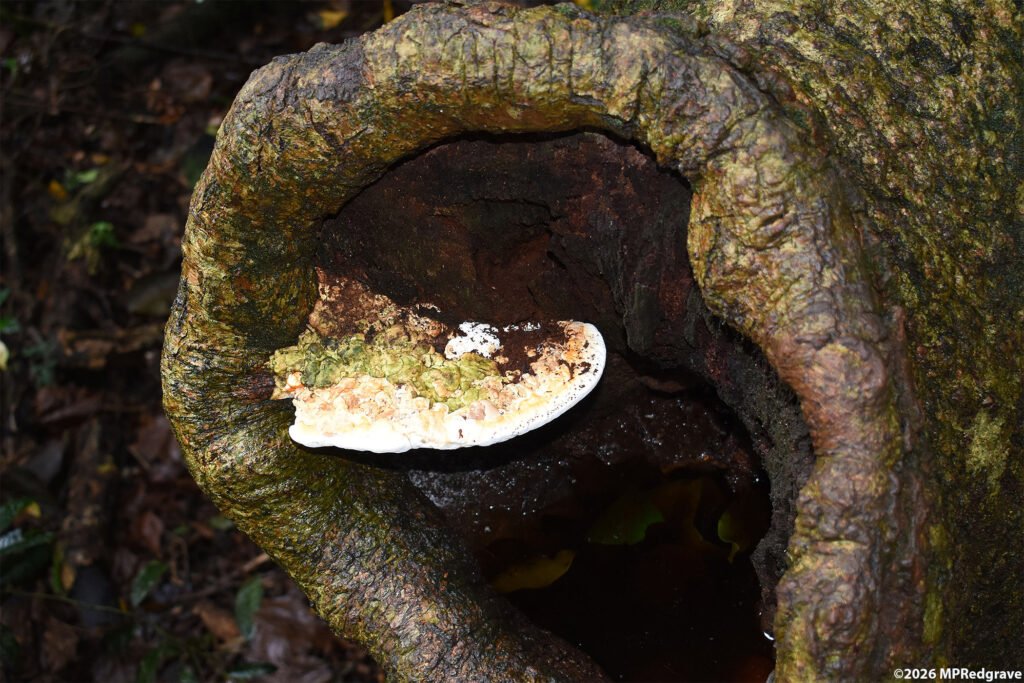
While I wouldn’t call it one of the pretty growing things near Iguazú Falls, this bracket fungus certainly was interesting. It was growing in a water-filled cavity of a tree that had lost a large branch some time ago. The wood inside the lost branch’s root had rotted away while the tree grew its bark to curl over the opening. With all the moisture present, a bracket fungus got a foothold in the cavity, eventually forming this large shoe-shaped mass. Its natural color is white, but its top appears orange and brown and green. None of those colors belongs to the fungus. Instead, the colors are produced by algae and lichens that have colonized its surface.

As I walked a trail near Iguazú Falls, I saw that a small group of people were gathered staring off the trail. They had found a troop of coatimundis in the forest near the trail. One of the young female coatis posed for me.

Coatis are curious and intelligent relatives of raccoons. They are not generally aggressive and coexist fairly easily with humans, but they will fight when cornered or threatened. And they’re quite well armed! Just check out the toenails on this older female!
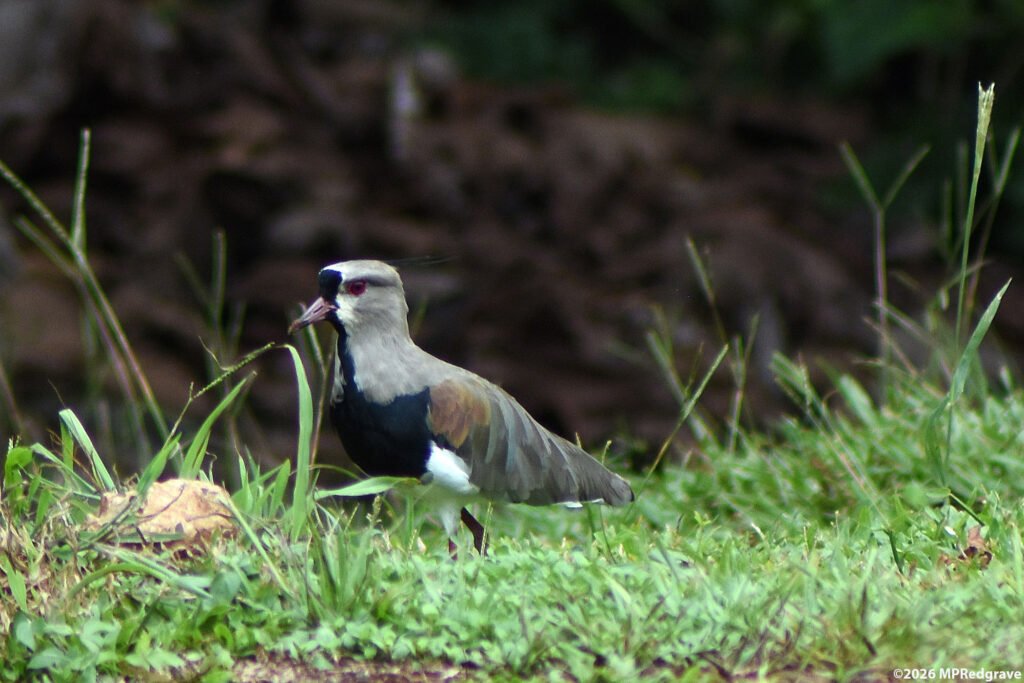
Coatimundis weren’t the only critters I encountered at Iguazú Falls. This Southern Lapwing came by to visit and stayed long enough for me to get a decent photo of him. Lapwings don’t live excusively in the Iguazú area. In fact, they are one of the most common birds in South America, living basically everywhere on the continent except for the Amazon and the Andes.
We saw much rarer toucans during our visit to the Argentinian side of Iguazú Falls, but they’re tree dwellers that fly quite fast from tree to tree. Unfortunately—and it wasn’t for lack of trying!—I never did get a decent shot of a toucan.
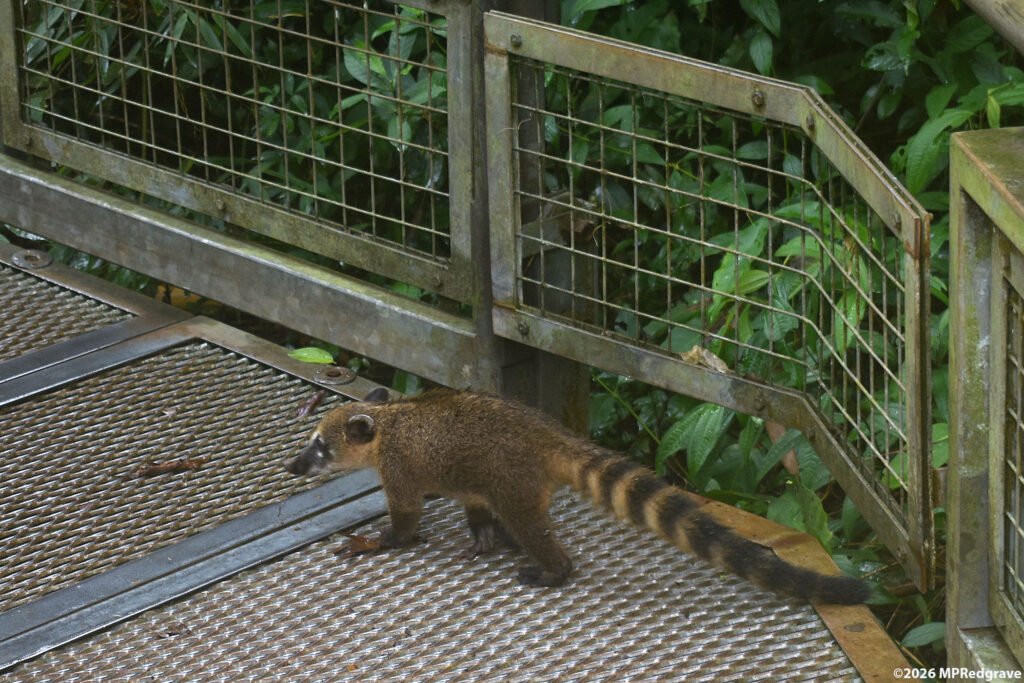
As I mentioned, the coatimundis are clever creatures. They had obviously figured out that the best way to get from one side of the waterfall to the other was to use the bridge that the bipeds had built for them.
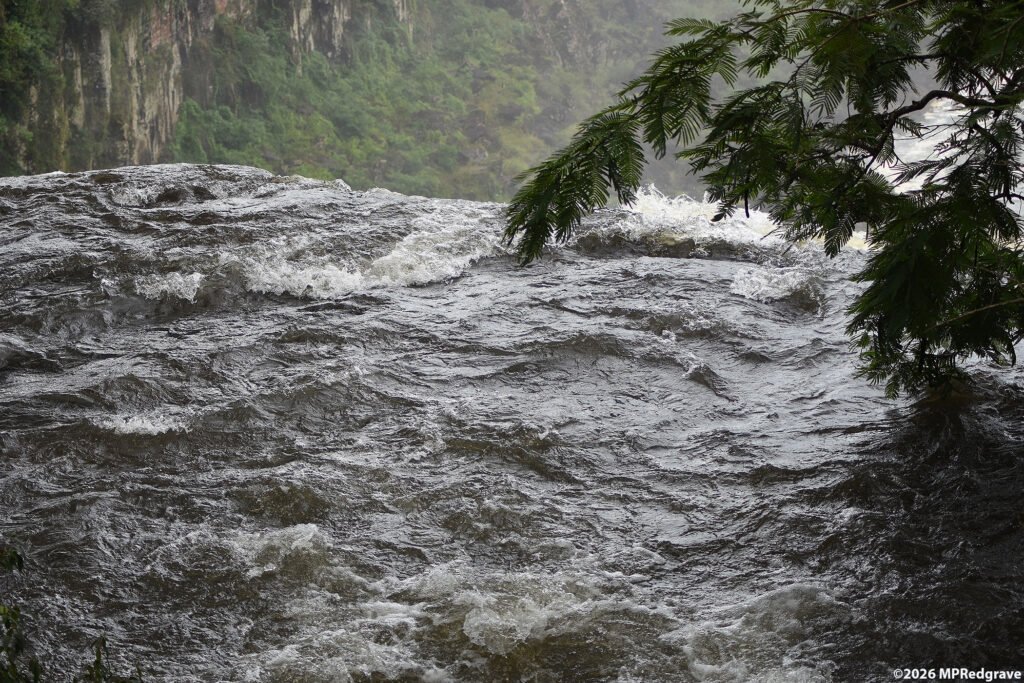
If you see this as you’re paddling your canoe down the river, your life is about to get very exciting very quickly!