Antarctica, Argentina, Uruguay, and Brazil
Crossing the Drake and into the Beagle
After five magnificent days in Antarctica, heading back to Argentina meant a 3-day sail across the infamous Drake Passage and then a short voyage down the welcomely calm Beagle Channel to Ushuaia.
Here are some photos (and a video!):
The Drake Passage—the body of water that lies between the southern tip of South America and Antarctica—has a reputation for having particularly rough seas. This clip is typical of what we experienced, and I didn't think it was bad at all. On the other hand, only about half the usual crowd showed up for dinner, so maybe it was uncomfortable in a way that I didn't experience. You be the judge.

Once we were in the Beagle Channel, the seas flattened and the birds came out. This is a black-browed albatros, a fairly large bird that looked like a gull with inordinately long wings. These birds are known for soaring over the open ocean for days on end, but here in the Beagle they put on an impressive exhibition of aerobatic prowess. I could watch them for hours.
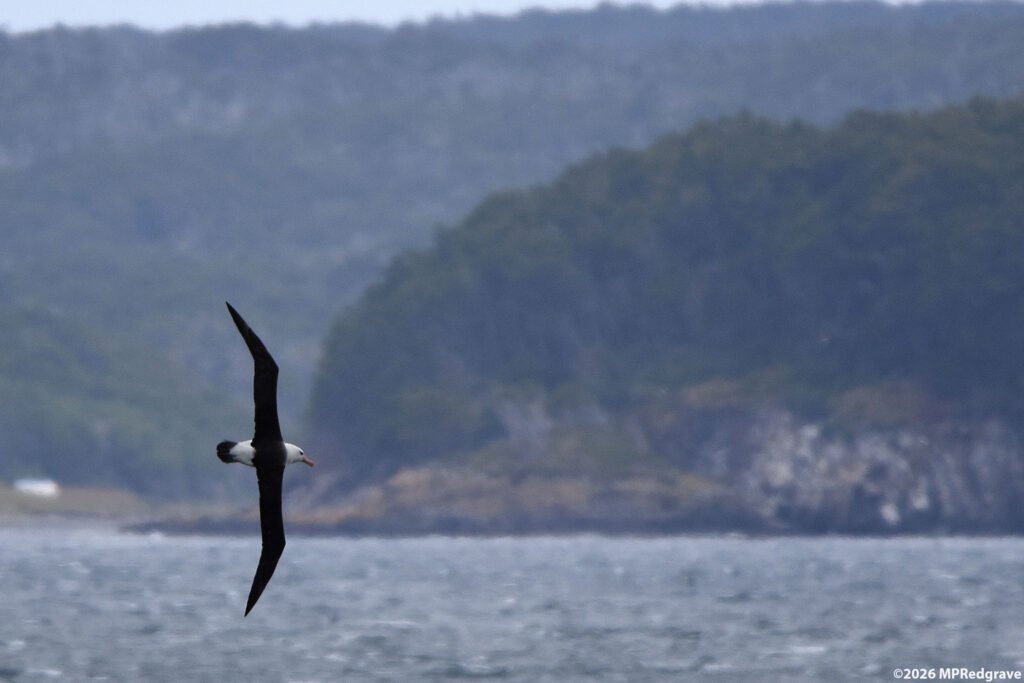
The albatrosses would skim over the water, their wingtips never quite touching the surface, and then would suddenly rise up, bank 90° and pivot within its own wingspan. OMG, if I tried that in a Cessna, the wings would go one way and the fuselage the other. Yet the albatrosses did that time after time with extraordinary gracefulness—and no hint of damage. Impressive flyers!

It was showery in the Beagle, but sometimes showers have colorful benefits.
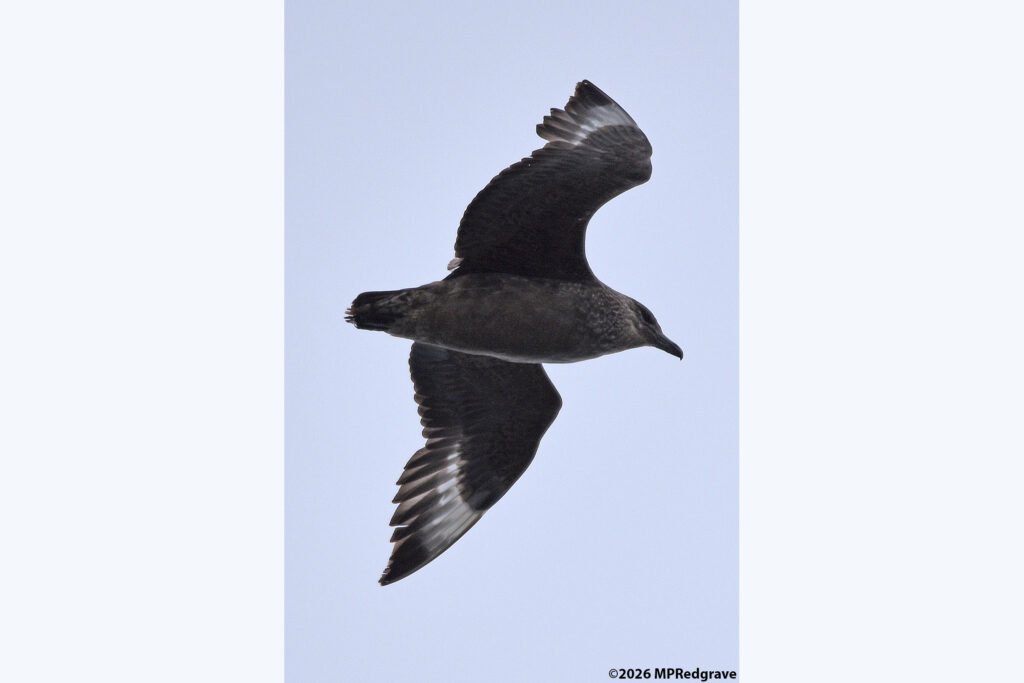
Do you recognize this guy from Antarctica? Yes, it's a Skua. Unlike the water-skimming albatrosses, the Skuas flew much higher, zooming across the skies looking for a meal to snatch.
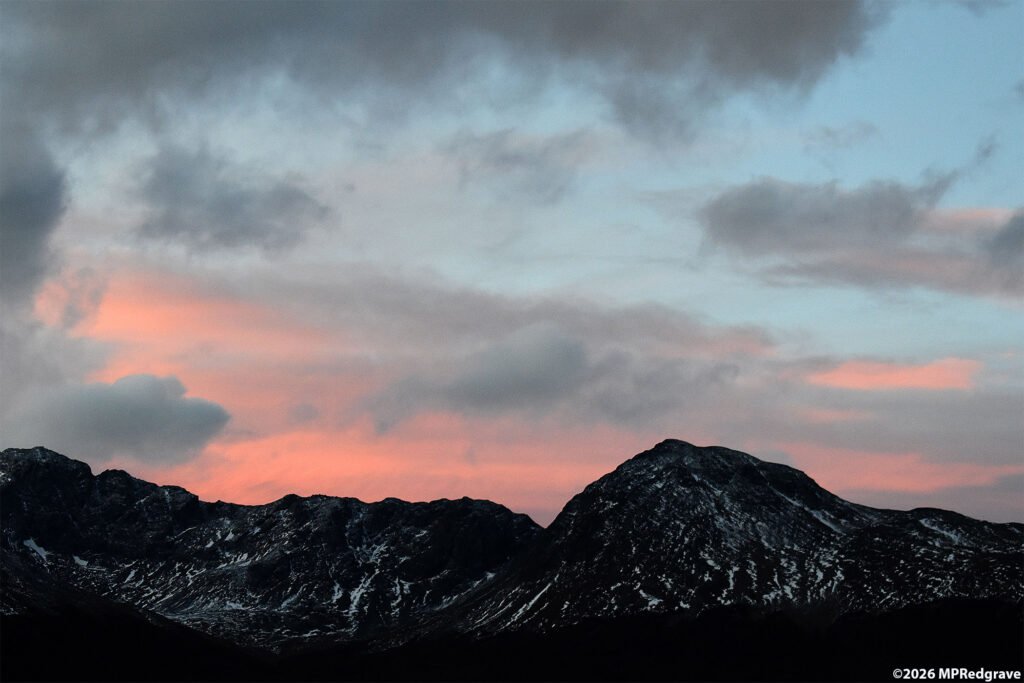
As we approached Ushuaia at sunset, the clouds parted just enough to put on this fiery show over the southern tip of the Andes.

Ushuaia lies about 55° south of the equator, roughly equivalent to how far Ketchikan, Alaska is north of the equator. In many ways, Ushuaia reminded me of the towns in the panhandle of Alaska. Both are cool and cloudy in their summers and brutally cold in their winters, and both are wedged between steep, mountainous slopes and the ocean. Ushuaia, though, seems so much more remote! No wonder the locals call their town "The End of the World".